Mid and East Antrim PCSP seeks to SNUS it Out of Sport
Wednesday 29 April 2026
The growing use of snus and nicotine pouches - particularly in football, is the focus of a partnership between the Mid and East Antrim Policing and Community Safety Partnership (MEA PCSP), the Irish Football Association (IFA) and ASCERT.
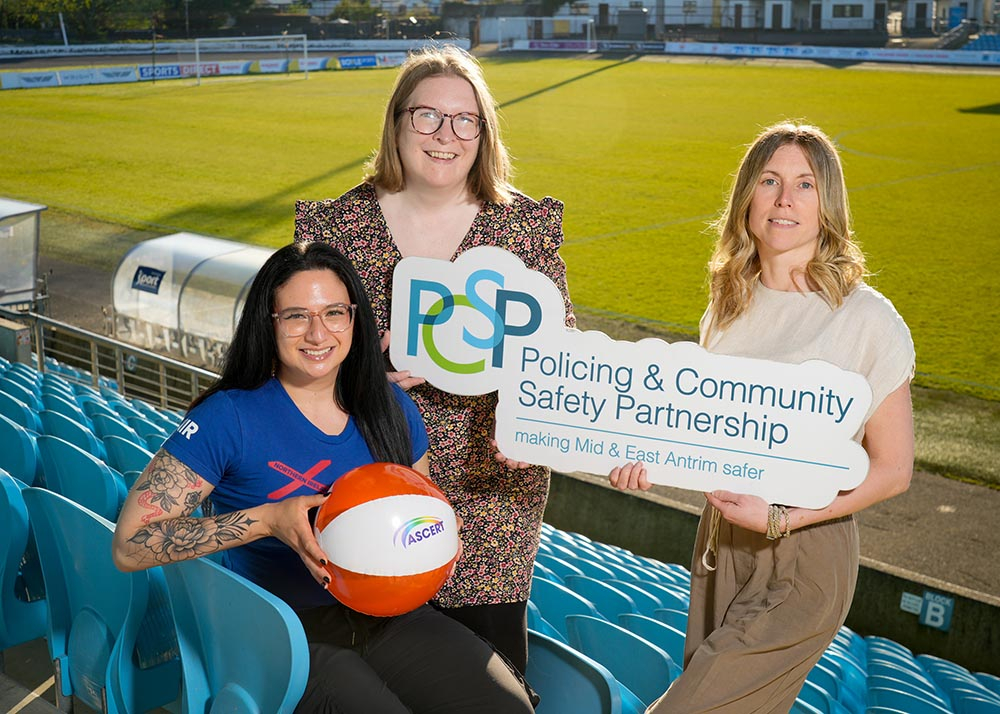
These organisations are urging greater awareness of the snus risks, myths and support available for those who want to stop. It is illegal to sell snus in the UK.
Snus has tobacco, flavourings and other additives in a small, teabag‑like pouch. Typically, it is placed in the mouth between the upper lip and gum and is mistakenly often seen as harmless.
MEA PCSP facilitated a dedicated information and advice evening for local clubs, coaches, parents, players and community representatives, to recognise that snus carries real risks, and many users need help to quit its use. Unlike other smokeless tobacco, they do not require spitting, making them easier to use discreetly, including during training and matches.
Chair of Mid and East Antrim PCSP, Councillor Lauren Gray, said: “Through our Mid and East Antrim PCSP Drugs & Alcohol Steering Group, the growing trend of SNUS use, and its dangers was identified.
“This Steering Group is a multi-agency working group of key statutory, community and voluntary organisations who work collaboratively to address Drugs & Alcohol issues across the Borough.
“Our work is focused on prevention and early intervention through key networks, information sharing and providing training opportunities across the Borough, and as a PCSP, we felt it important to highlight that snus and nicotine pouch use is not just a sporting issue - it is a community safety concern for all, and particularly for young people and young men.
“PCSP would take this opportunity to thank our colleagues at ASCERT and the Irish Football Association for their work in developing this excellent community safety training resource, which I am delighted has been launched in Mid and East Antrim.”
Training Officer for ASCERT, Elena Brewer MPH, explained: “In the short-term, snus and nicotine pouches can cause anxiety, nausea, headaches, poor sleep, chest tightness, and increased heart rate and blood pressure.
“While long‑term risks include cardiovascular disease, gum disease, delayed wound healing, nicotine dependence and withdrawal, and for tobacco‑based snus, an increased risk of cancer.
“From a wellbeing perspective, nicotine use is closely linked to mental health and stress. Many users report using snus to cope with pressure, anxiety or disrupted routines, yet nicotine can worsen sleep, increase anxiety symptoms and reinforce dependence. This creates a cycle where people rely on nicotine to ‘cope’, while the substance itself undermines resilience and recovery.”
“We hope the information sessions convey that education, open conversation and supportive, non‑punitive approaches are key to helping people make informed choices, and that they can access the support they need.”
Players report using snus for relaxation, stress management, social bonding, weight control and perceived performance benefits, such as mental readiness. However, evidence that nicotine improves athletic performance is mixed, and experts have concluded nicotine is just as likely to harm performance as help it.
In sport, additional risks include reduced sleep and appetite which negatively affects recovery, increases anxiety or over‑relaxation, and can result in potential anti‑doping rule violations due to the poor regulation of products.
The advice for sports organisations emphasises that prevention and support should focus on education rather than punishment. Club bans can drive use underground and discourage players from asking for help. Instead, effective approaches include:
- Raising awareness of health risks and challenging myths that “everyone is using snus”
- Teaching healthier coping strategies for stress, injury and performance pressure
- Building refusal skills, especially among younger players
- Normalising help‑seeking and providing clear signposting to support services.
Support is available through services such as ASCERT, NIDACTS, and Family Support NI, which provide advice, treatment pathways and wider family and wellbeing support.
For more information about this community safety initiative or about PCSP programmes in general, contact: pcsp@midandeastantrim.gov.uk